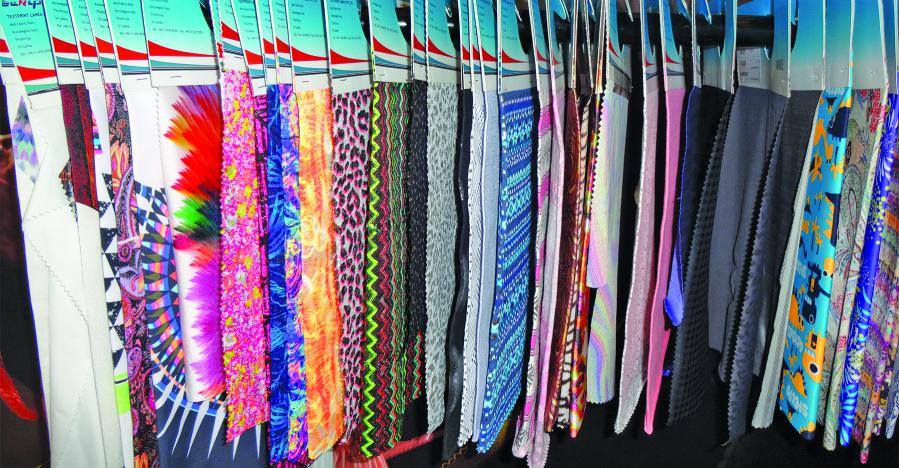
The only international sourcing fair in India for the intimatewear industry, Galleria Intima, recently concluded successfully in Delhi with good and serious visitation from the industry. Almost 50 participants including fabric, accessory and technology providers participated at the event. In the fabric segment, Shree Ginger Enterprises, Bhoomi Textiles, Stuti Exports, Penn Textile Solutions and Textprint Lanka were the main participants apart from a few exhibitors from China. As each company claimed individual specialization, Apparel Online interacted with them to explore their offerings and discuss market predictions… All of them are enthusiastic of the growth in the intimatewear market of India.

The application of digital prints are increasing in all kinds of garments and the same is true for the intimatewear industry too, that is why the focus of Bhoomi Textile, Ahmedabad was on digitally printed fabric. Mainly into knitted fabric, the company offered various blends like cotton modal, viscose modal, modal spandex to name a few. Known for prints as its strength, the company has observed more demand of fabric which is soft and flowy, in the range of 160 to 180 GSM. “We feel that digital is the future, so we are in the process to double our capacity from 4 digital printers by adding another 4,” stated Chintan Shah, Director (Sales & Marketing), Bhoomi Textiles. The company as of now has the capacity to produce 600 tonnes of fabric every month and plans are to increase the same to around 900 or 1000 tonnes per month by 2017. It is also investing in different types of finishing equipments for wider product offering.



Sri Lanka-based Textprint Lanka, which is looking to penetrate into the Indian market with synthetic fabrics, was also showcasing digital prints in its collection. “We have noticed the increasing use of synthetic fabrics in India, for both the domestic as well as export market. India has limited options in printed synthetic fabrics of export quality, as most of the mills work with domestic and Indian wear while we have experience of working with high-end brands like Victoria Secret, Nike, Triumph, etc,” says MRM Dilshan, Director – Operations of the company. Besides digital prints, the company also has facility for other printing options like screen and rotary, with added facility for value additions in the same like flock and silicon printing. Another strength of the company is that it does printing/value addition on fabric (in the roll form) while most of the other companies do it in cut panel form. As ‘Amante’ is its own brand and it is supplying fabric for most of the top brands, it has a good market understanding in terms of consumer taste and that can be seen in its fabric offering as well. Currently, the company has a fabric collection focused on Autumn/Winter ’16-17.


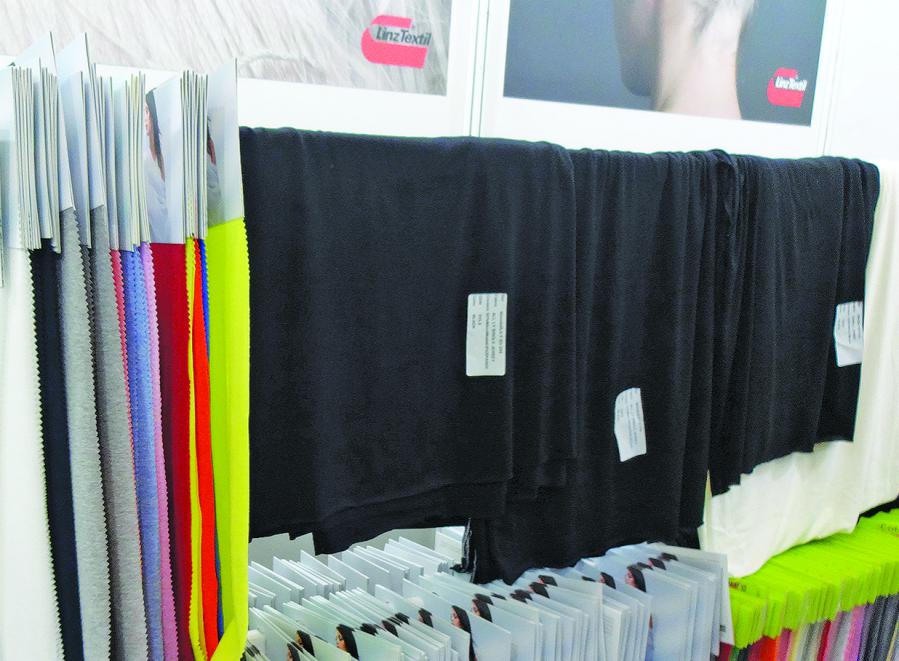
Apart from different options in prints, companies also had different kinds of fabrics and yarns to showcase. Stuti Exports, Mumbai which associated with many foreign companies is offering no pilling fabric of Linz Textil for the intimate industry. Pradeep Roongta, MD of the company informed that for no pilling fabric the spinning technology which particularly Linz Textil has, as of now no one in India has. In cellulose, normally filling is very high. “As this fabric is more expensive and more specialized, very limited companies are using it, but as market is developing, our product is picking up,” informed Roongta.
Though the specialization of Shree Ginger Enterprises is cotton knits, but it is very flexible as it also manufactures synthetic fabric, various kinds of blends and also offers value addition to cater to the masses. Its digital PC spandex sinker, digital pleated cotSpa sinker, digital 30s cotSpa sinker, digital 40 spun sinker, digital 66s PC interlock, digital 60s PC pleated is being appreciated. With a capacity of 135 tonnes per day, the company is also into garmenting and now focusing more on the segment. Sanjay Kumar Tayal, Chairman of the company says, “Garment manufacturers sourcing fabric from us are now interested to get complete garment so we see it as a key growth area as we are offering garments at the same cost at which they were produced.”
Penn Textile Solutions, Germany had on display specialized kind of fabric for shapewear and is trying to penetrate into Indian market. Thomas Siemensmeyer, CEO of the company, claims that they are specialized in warp knitted fabric and use lycra, spandex. “We are very innovative in creating solutions for garments to make them more comfortable. We do it in a way which we call dreamshape; we have developed a technology in the fabric which doesn’t need a certain kind of seaming or elastic. We have created fabric where we have different power zones within two dimensional fabrics and they get into the garment in a kind of three dimensional functions and, also there are areas with high modulus and areas with low modulus which are combined within one fabric. The intension is to create a fabric which is lightweight and to avoid lamination or sowing of second layer of fabric in order to achieve compression on the skin. We use this solution where we have only one layer of fabric and this one layer is more comfortable to wear. It is not so fit, so the body doesn’t get sweaty and it’s more breathable.”
More and more foreign fabric companies are coming to India and exploring market with direct contacts with the Indian garment manufacturers; but India fabric manufacturers are not worried as they have better understanding of market, are capable of handling small order sizes, can provide variety of designs, have easy reach, besides import duty on imported fabrics make them more competitive. Not to be deterred, foreign companies are enthusiastic of the edges they have despite import duty, high price and no local network. Dilshan says, “We are able to deliver in shorter lead time, and being SAARC members we don’t have duty-related issues. More than that our collection and R&D are the strengths which will help us to create better space in the Indian market. It is right that we may have to develop local network for better reach and price is a challenge, but we are positive.” On the other hand, Thomas Siemensmeyer is of the opinion that duty and high price are challenges but as Indian exporters are moving towards catering to top brands of the world and Indian customers too are increasingly using advance products and are ready to pay price so their product will find space in the Indian market.
Accessories companies are looking for growth
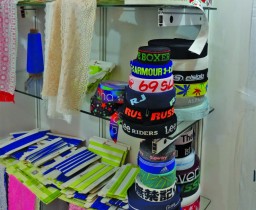
Catering to all the verticals of intimate apparels, be it raw material, semifinished or ready products, apart from fabric Kotak Overseas, Mumbai is offering all things which are required for a bra. Nikhil Kotak, CEO of the company claims, “Even today many Indian companies are not capable to make form cup so they source it from us. As we have better understanding and availability of all products, many companies are sourcing ready bras from us so they can better focus on their marketing initiative.” The product specialization of the company is cotton moulded padded bra which according to Nikhil is like a grey area in the market as some companies that are doing similar kinds of products, are using cotton on polyester pads, but no one is in direct cotton lamination. Currently, the company has 125 stitching machines and 50 moulding heads for cups.

Indian companies that were earlier sourcing raw material from China for their own use are now entering into a partnership to provide marketing support to Chinese companies like Texgeek, a Tirupur-based company having 60 per cent of its business share in garment exports recently associated with China-based Jiangsu Golden Autumn Elastic Fabrics. Vivek Iyer, Director of Texgeek Tirupur informed, “We are specialized in final product – lingerie (bra, panty and all kinds of inner garments) and we were sourcing raw materials from Jiangsu Golden Autumn Elastic Fabrics for the past 7 years and now we feel that there is a need to move to the next level where we represent Jiangsu, as it doesn’t have so much of exposure to India. They too felt the need to go to the next level where they can have an Indian representative, so we came up with this new association.”
He Ping, GM of Jiangsu Golden Autumn Elastic Fabrics says, “Our specialty is elastic for sportswear and underwear. In China we have a yarn dyeing factory so we also offer yarn. If the things move according to our plan and expectation we may put up an elastic factory in India also. We are ahead in R&D and are developing various kinds of raw material in elastics – with very soft hand feel, microfibre elastic and other functional elastics. We can produce half a million metres of elastic per day and have 25 years of experience. I am the second generation of our family business. About 95 per cent of the yarn that we are using is a variety of Nylon.”
Machine and Technology companies too are assured and aggressive
Along with the fabric and accessory suppliers, technology and machine companies are equally happy, optimistic and aggressive with the growing intimate apparel industry. Their expectations are based on the good performance of this industry during the last three years, a fact which they have observed through discussions with the manufacturers of intimate apparels. Interesting point is that every segment of the industry be it top brands or exporters, middle-level companies or unorganized sector, all are enthusiastic and shifting towards automation despite many challenges.
Intimatewear broadly covers undergarments, sleepwear, shapewear, loungewear, swimwear, etc. In 2013 global imports of intimatewear of US $ 34,485 million. India’s share in global exports of intimatewear is only 4 per cent; US, UK and UAE are the top 3 markets for Indian intimatewear.
R. Selvan, ED, Mehala is continuously targeting the intimatewear industry, as he feels that the market is very good and the next 3 years are also predicted to be good for all segments of this industry be it top brands or unorganized small factories. Manufacturers are using new machines/automation in all the segments especially in cutting room solutions; secondly, in finishing as it is directly visible and customer’s expectation are also increasing. While improvement in stitching is a continuous process increasing cost of training is also motivating companies to cut cost in various departments. Mehala has a very good variety of machines for the intimate industry in the Siruba brand for various operations like three needle five thread tubular jacquard pre-closed elastic waistband attaching with right hand side fabric trimmer, mechatronic overlock stitch machine with pneumatic type tape/ thread cutter and many more.
The companies that were offering accessories only for lingerie industry, are now manufacturing complete bra. On the other side, a few companies that are already manufacturing variety of intimatewear are now associating themselves with their Chinese suppliers of raw material to market their products in India.
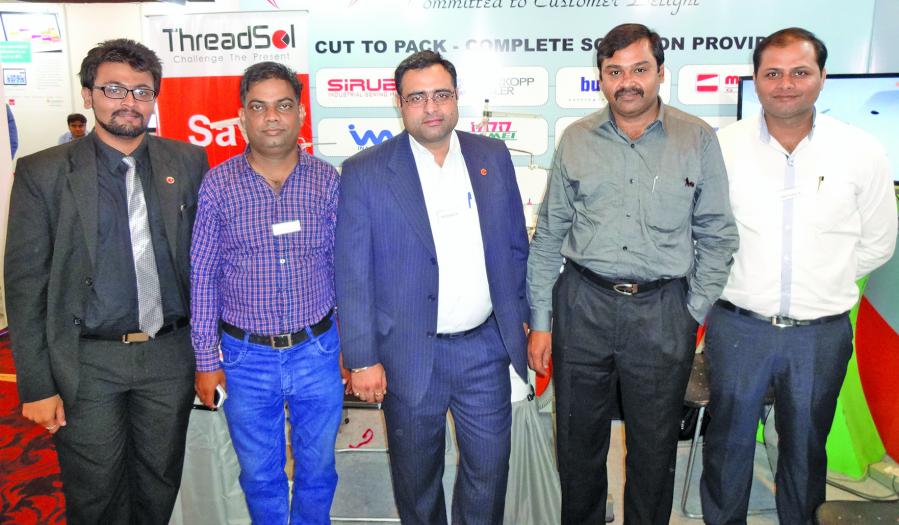
Growing market sentiments are a motivation to the machine manufacturers to offer new developments and Yamato, known for its machines especially for intimate and knitted apparels, is coming up with a particular machine for sleepwear which trims even the edges of fabric. Harish Paliwal, Branch Manager of the company shares his experience, “We are enhancing our focus and penetration on the intimate industry as Yamato is already tied up with many international intimate brands and now stepping towards Indian domestic brands. Wherever we have gone, be it a big or small company, they definitely want to change. We have gone A to B category of customers, and even B to C category of customers. Dayby-day domestic industry is more aware and responsible for quality, process and this includes everything.” Yamato has a patented technology which ensures the maximum use of thread. IIGM, representing Yamato in India is also of the similar opinion. “In last 3-4 years top brands have increased their dependency on technology and increasing their productivity, hence they are able to control the cost. While middle-level companies are comparatively lacking in use of automation, their priority is direct drive machines and machines with UBT,” says Sudhir Sharma, VP (Service), IIGM.


Whereas middle level companies are concerned, heavy investment of machines is still a challenge for them and currency fluctuation is also adding obstacles. Udit Kumar Mital, Product Manager of HCA is of the opinion, “No doubt, exporters and big brands are growing and investing, but middle level companies have lesser margins so they still prefer cheaper machines. We are trying to convince them to invest in quality products and later or sooner, they have to do it.” Apart from vast range of sewing machines HCA offers Hams, Highlead, Kansai, Megasew and Duke’s machines for various operations in intimatewear industry.
Inspired by the growing pace of the intimatewear industry H&H offers bonding technology for stitchless garments. The company very recently got some orders and it believes that seamless is going to be a big portion of the intimatewear market in the future. ATE Enterprises, Mumbai is also planning to enter the arena with bra moulding technology and automatic lace attaching machine. “I am satisfied that the intimatewear industry is now very clear that technology will lead them to big manufacturing units. Now the Government is also more supportive, which is in fact a good sign. Only with big setups can this industry ask for bigger orders from there buyers,” says KB Prasad, VP, Textile Engineering – Garment & Home Textile Machinery. Juki, represented by ATE is also focusing on the intimatewear segment.

Apart from stitching and allied technology, there are companies like Morgan Tecnica Spa focusing on cutting room automation and who already have good customer base in the intimate industry. “I have noticed that both young entrepreneurs and the second generation is coming up and they have very clear vision and focus to go with high technology to be competitive. Even domestic brands are investing in the technology, and I can say that in this particular segment domestic is doing better than export,” observes Anand Kumar, ED, GA Morgan Dynamics, Bangalore. The company has also started a training centre in Bangalore with all its equipments where it provides training and placement opportunities.
Munich Fabric Start notes a decent visitation
Recently concluded 39th edition of Munich Fabric Start trade show witnessed a footfall of 19,700 visitors. Though the figure is almost similar to last year but the portion of visitors from abroad increased by 38% as French, Eastern European, Asian and Argentinean visitors were more in numbers than in the past. The event was focused on Autumn/Winter 2016-17 season and around 1,000 suppliers from 36 countries participated at the show.
Wolfgang Klinder, Managing CoDirector of the fair averred that the success of the event owes to the tools that are put in place – making Munich a veritable decision-making platform at a time when the players need more and more information in an unstable market situation.
The next edition of the show, slated to take place from February 2-4, 2016, will be even bigger as it will expand by 2,000 sq. m. in size.
TANTU to hold seminar on Protective Textiles
TANTU, a group of core professionals serving the textile and allied industries in North India, has announced a seminar on protective textiles. Titled ‘Protective Textiles: New Vista of Opportunities’, the seminar will be held in Delhi on 11th October. The seminar, conceptualized in the wake of opportunities that have emerged from consumer behaviour like awareness about wellness, increasing massinterest in active sports and outdoor leisure activities and the burgeoning workwear industry, proposes to delineate the growth path for this flourishing category. The speakers from the fields of Clothtech, Autotech, Protech, Medtech and Sporttech will converge to discuss about the immense potential, share their experiences and service providers will share their solutions in the highly specialized field. A highly interactive panel discussion will discuss about the strength, weakness, and opportunities for Indian businesses to tap this unexplored market.





 Bharat Tex Special Report 2026