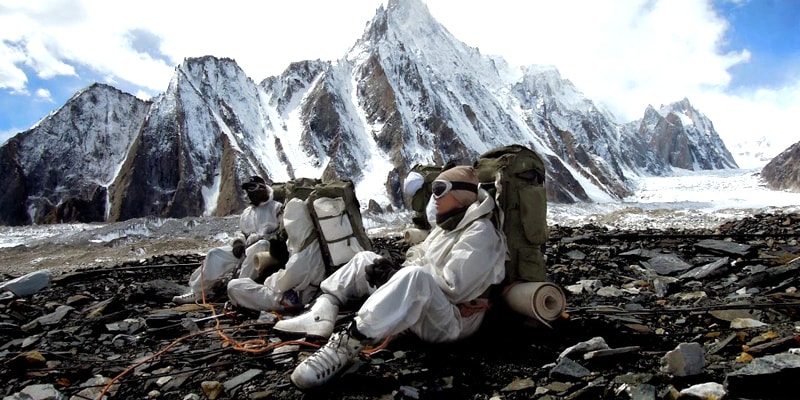
Siachen – the world’s highest and coldest active war zone with extremely uninhabitable conditions where Indian Army operates at heights of over 20,000 feet. Sustaining at such a high altitude is an extremely tough task. The valiant heroes up there, protecting the nation, require specialized extreme winter clothing items such as special jackets, trousers, boots, and sleeping bags.
The Indian Army imports even the most basic equipment and personal items required to sustain troops there at an extremely expensive price. But things are changing now coming with the indigenous production increasing with involving the private sector in addition to the Defence Public Sector Undertakings.
It may be worth mentioning here that the Army spends about Rs. 500 crore every year on basic personal items for its soldiers. These items include super high altitude clothing such as rucksack special socks, thermal insoles, snow goggles and High Altitude Pulmonary Oedema (HAPO) bag.
“Over the last two years five items costing about Rs. 100 crore annually has been produced locally. Over the next 3-4 years the target is to indigenize the remaining Rs. 400 crore,” reportedly said an Army personnel.
Walking on the same lines, the third Defence-Indian Technical Textile Association (ITTA) joint seminar and exhibition, will be held on 22nd-23rd May in New Delhi, themed “Indigenization and provision of improved products to our soldiers”.
Also Read – Indian Army finally gets bulletproof jackets
Around 40 companies from Indian textile industry will display items of general stores including High Altitude/Extreme Cold climate clothing for Special Force and Nuclear, biological and Chemical (NBC) protection. “Over the past two years through this forum, approx. 20 per cent of our import load for Super High Altitude Areas has been reduced through indigenization,” added the Army personnel.
Lt. Gen. RR Nimbhorkar, Master General Ordnance (MGO) said, “Such initiatives supported by the textile ministry and defence ministry will lead to price competitiveness, transparency and entry of quality players which will automatically bring in much required R&D and indigenization…”