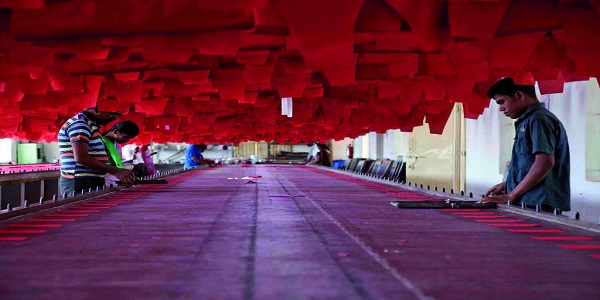
Facing pressures due to various reasons like global economic slowdown and Trans Pacific Partnership (TPP), of which India is not a part, the Indian textile and apparel industry is facing a lot of heat, due to which it is cutting down on the number of jobs. Job creation by the apparel and textile industry dropped by 70 per cent approximately in the quarter that ended in March 2015, as compared to December 2014 quarter, according to the 25th quarterly report on changes in employment. The handloom and powerloom industry recorded 3,000 jobs being cut during October to December 2014, and 2,000 during January to March 2015. In addition to job cutting, a lot of handloom and powerloom units witnessed close down or their capacities being slashed to half in the last few months, with Government policies like withdrawal of interest subvention and duty drawbacks adding to their grief.
Read more about TPP’s impact on apparel and textiles sector– TPP will adversely impact the Indian textiles industry: Sachit Jain
Due to a lot of dependence on Chinese market for cotton and synthetic yarn export, yarn and fabric verticals are troubled dealing with excess stock and inventory pile-up, as China reduced imports from India. This too resulted in decline in capacity and hence adversely affecting job creation. “Government policy has not been targeted towards the textile industry. Through ‘Make in India’ initiative, production was expected to rise, but it has not been backed by policy from the Centre. With China reducing cotton yarn imports, rising inventory in the domestic textile sector has also led to a reduction in job creation. There has been an overall five to 10 per cent decline in capacity utilisation,” said O P Lohia, Chairman and Managing Director, Indo Rama Synthetics.
Poor rate of return on capital investment due to Central Government’s decision of taking back interest subvention of 3 per cent has limited the scope of expansion for the apparel exporters as they now have to bear an interest of 10 to 12 per cent on capital. “There are several factors that have hampered job growth in the industry, especially in the apparel sector. First, the industry has almost stopped expansion work. Second, the slowdown in exports has dampened outlook. And third, the domestic market, too, is not booming. There has been hardly seven to eight per cent growth in recent times and this rate of growth does not require any expansion to be made. This is why there is no expansion on the labour front as well,” said Rahul Mehta, President, Clothing Manufacturers’ Association of India (CMAI). The apparel industry still hopes to bounce back after November with increase in exports.