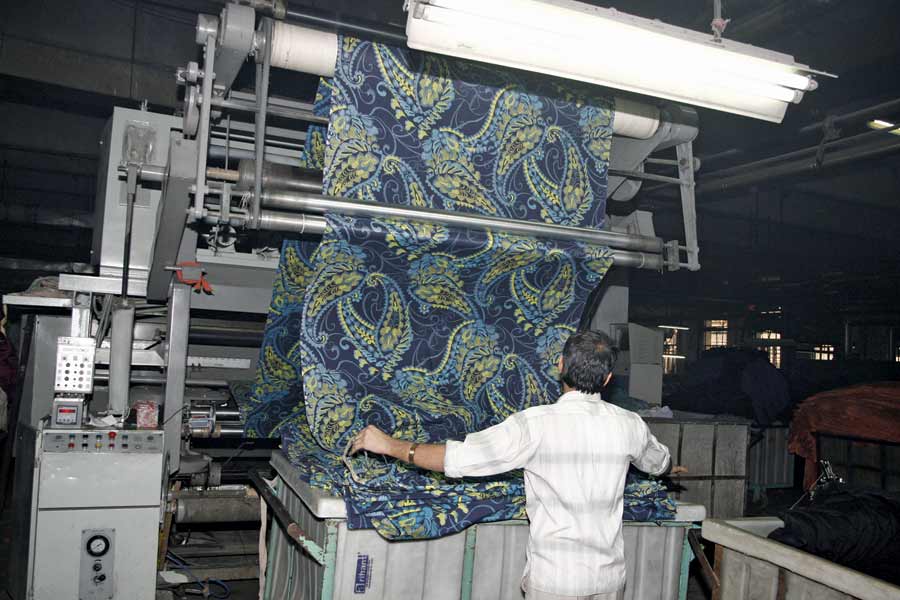
Close proximity to Delhi has made Faridabad a strong processing hub for fabrics and garments. There are about 50-55 running process houses in the city and most of them are catering to export market. They are nominated suppliers to buyers like H&M, JCPenney, Next, GAP, Esprit, Otto AGN, M&S to mention the prominent ones. Some process houses have shut down or merged with another and some have grown exponentially in last five years having gone in for vertical integration. Very soon Faridabad is going to get CDR/CBR facility which as of now is only available with a few textile mills or processors in Ahmedabad.
Team Apparel Online toured the city and met with a few process houses to get an update on the hub.
More than the garment exporters it is the buying offices which take the initiative of interacting with the processors from development to final approval. They nominate the process houses which they feel are compliant to their standards and can deliver the quality and price in their desired lead times
Today processors in Faridabad are giving all kinds of specialized finishes be it different silicons and softners to change the hand feel of the fabric, or nano, elastomanic, flame retardant, water repellent, dust proofing, wash and wear finishes, etc.
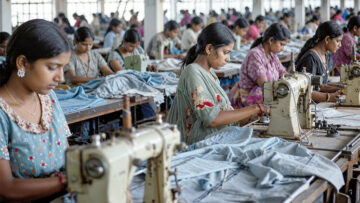
The hub is processing knitted and woven fabrics (dyeing and printing) along with garment processing.
The processing of woven fabrics is very similar to what Surat is doing but more value-added.
Most of the processors who are in woven processing in Faridabad are slowly adding one or two soft flows and certain finishing lines so that they can handle knits as well.
The processing industry in Faridabad is quite fragmented. There are about 10-15 big players processing between 100,000 to 80,000 metres per day in woven fabric and nearly 15 tonnes in knits as compared to the smaller ones dyeing between 40,000 to 30,000 metres per day in woven and about 5-6 tonnes in knitted fabric. There is business for everyone as bigger players are slightly expensive than the smaller ones since their overheads are higher. Says Vishal Aggarwal, Jt. Managing Director of STL Global Ltd., a public limited company, doing a turnover of Rs. 400 crore per annum and processing both woven and knitted fabrics, “Working with strict quality controls, following compliance norms and investing in different certifications have a price attached.”
We suggest to the Government that we are running our own ETP and they can support us by implementing a system to clean that water again by a common channel. It would be cost-effective as well as save the environment.”
Vishal cited the example of voile or cambric which has to be dyed into a white; STL would be charging about Rs. 5.5 to Rs. 6 per metre to convert that fabric into white while in a small setup it can be done in Rs. 3. “This is where nomination and bigger buying houses come into the scene. If your dye house is nominated then you do not worry about the business,” states Vishal. They are nominated by buying houses like GAP, Next, Esprit and M&S. STL Global is a new entity after the merger of Shivalik Global owned by J.P. Agarwal, the present Chairman of STL (and father-in-law of Vishal) and Shyamtex owned by Vishal in 2006. STL is looking at upgrading its technology in next two years with an investment of Rs. 20 crore and expand its knitting division.
Advantage Faridabad
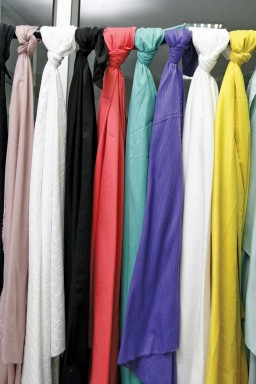


Delhi/NCR is the biggest textile made-ups hub in India. With maximum number of export houses and buying offices, this region is also famous for value-added products both in garments and home furnishing. A lot of the products are value-added with different types of finishes. In fabric and garment manufacturing business logistic management costs are very high. There is a constant movement of products for approval from the process units to the buying office. As per industry sources companies spend as high as Rs. 10,000 a day just to get the fabric approvals. The proximity of Faridabad to buyers has helped to control this cost while adding strength to developments.
More than the garment exporters it is the buying offices which take the initiative of interacting with the processors from development to final approval. They nominate the process houses which they feel are compliant to their standards and can deliver the quality and price in their desired lead times. Nowadays, process houses need to get certifications according to change in technology or for using new line of chemicals/finishes. If a process house starts using nanotechnology it gets registered for the same. Similarly if someone starts dyeing organic cotton they get certification from Organic Exchange as well as GOTS. All these certifications are required for niche buyers. Currently, a lot of organic product dyeing is happening in Faridabad. According to the processors one has to maintain distinct supply chain in organic products right from the fibre level. They have demarcated area for the same and separate trolleys for its movement. However, it is dyed in the same machine, same water is used, and same steam is used only the dye stuff is different.

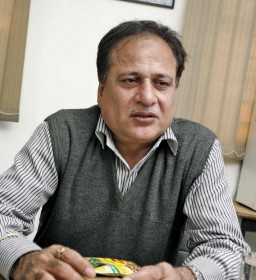
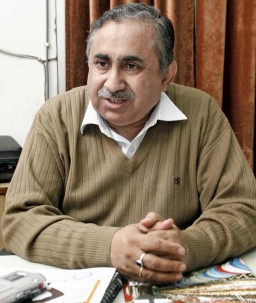

A public limited vertically integrated company, Haryana Texprints that started its own garmenting a year back is processing cotton-based fabrics and now also thinking of getting into polyester processing. It is one process house which is doing its development work in close association with the buyers. R. N. Maheshwari, Executive Director gave an interesting perspective. He says, “Normally the garment exporter deals with the buying offices. But in our case we do the developments with the buyers where it’s easy to understand the need of the buyer and develop the products accordingly; we even have control over the costing.”
The process houses are constantly doing developments to give variation in dyeing, printing and finishing. “We are helped in the process by the dye and chemical manufacturers,” says Vishal.
Depleting Ground Water
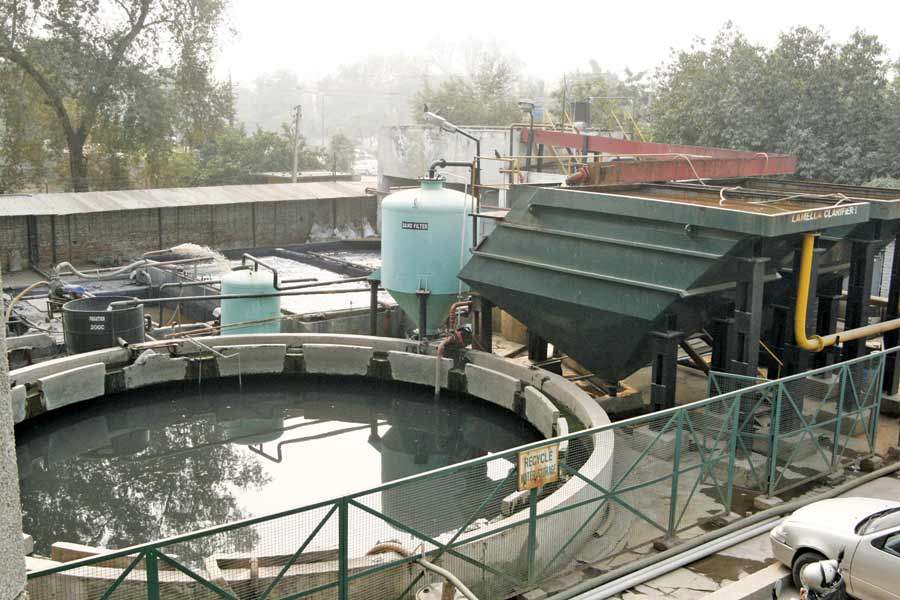
The processing infrastructure of Faridabad is 20 years old and the industry needs to come up with better technology where they consume less water as ground water in Faridabad has almost dried up. Treating water for reuse has become a necessity now, however majority of the processors feel that recycling the water is very expensive, therefore they depend on outside supply source (through tankers). Some of them have to buy around 40-45 tankers a day; one tanker cost Rs. 500. STL Global is recycling some of its water and also buying water. Says Vishal, “We have installed nanotechnology to recycle water. In our new plant we are trying to recycle 85-90% of our water requirement.”
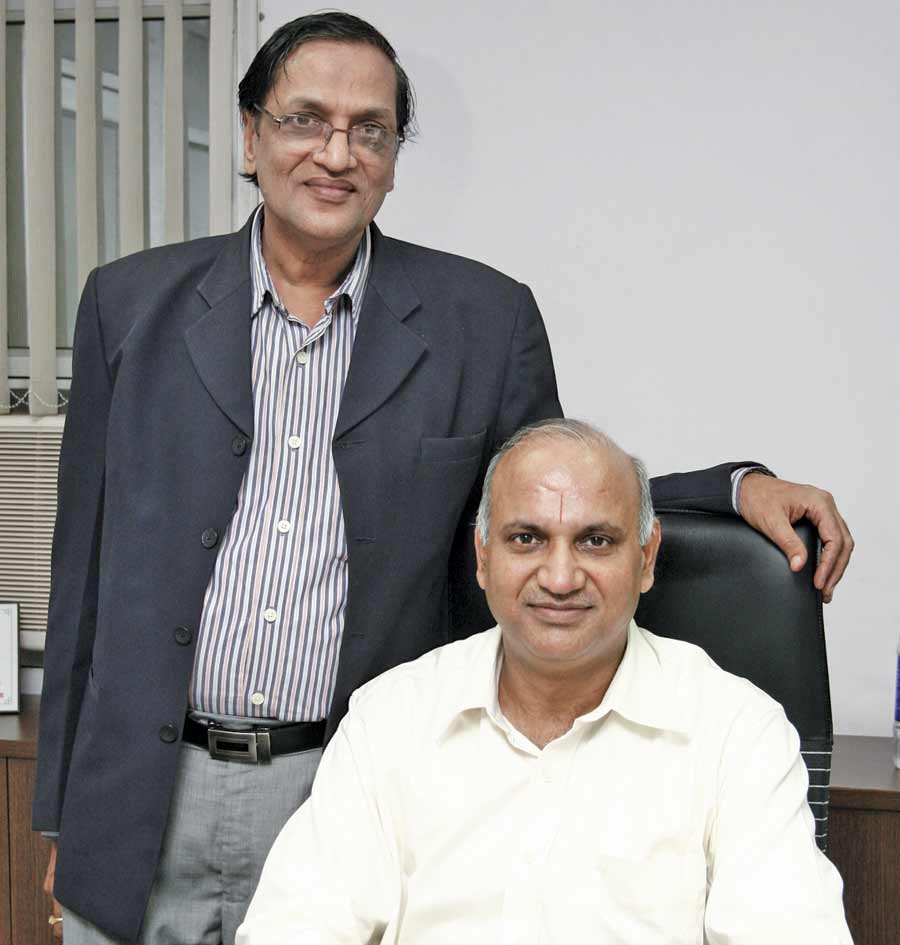
Mangalam Ventures Limited, a vertically integrated unit with a turnover of Rs. 45 crore started as a process house but due to water shortage in Faridabad moved on to garmenting and today it is knitting and processing fabric for its own captive consumption. “Recycling water is expensive and the buyer doesn’t want to understand or consider our pricing. Processing used to be huge for us but because of water scarcity, I had to reduce my processing capacity from 6 tonnes to 3 tonnes per day,” says Sharat Jain, Director. Whereas, Haryana Texprints is exploring the option of recycling the water. Says A.K. Gupta, GM of the company, “Buying water can be a short term solution but in longer run the process houses will have to think about more sustainable solution to run their dye houses.”
Creative Dyeing & Printing Mills has its own ETP and is treating about 10 lakh litres of water per day for its use. Shares B.S. Dhabriya, General Manager with the company, “In a year’s time we will upgrade our water treatment plant for 100% recycling of water.” Creative owned by P.S. Uppal, has investment about Rs. 4 crore in last two years and has lined up further investment towards installing CBR and CDR facility. Presently the company is using the CP (Cold Processing) machines to dye 5-10,000 metres per day.
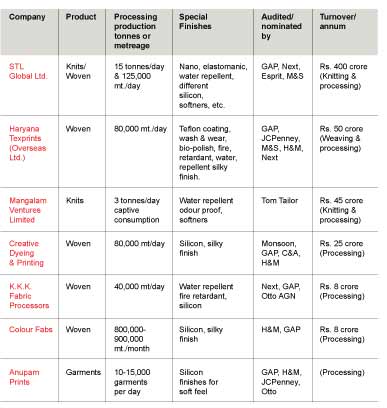 There is no CETP (Common Effluent Treatment Plant) in Faridabad. All the process houses have their own ETPs. New dyeing houses are coming up and Government is giving permission provided one has a proper plan and consent from the pollution department. As per S.P. Agnihotri, Director of K.K.K. Fabric Processors, a subsidiary of Luthara Textiles Limited, a vertically integrated unit, there is a common ETP in Sector 25, Faridabad but the treated water is not up to the mark so it is as good as not having a common ETP. He remarks, “We suggest to the Government that we are running our own ETP and they can support us by implementing a system to clean that water again by a common channel. It would be cost-effective as well as save the environment.”
Experimentations in Progress to Dye without Water
The process houses in Faridabad are exploring alternate sustainable solutions. K.K.K. Fabrics is experimenting with dry-dyeing… dyeing through heat transfer which consumes less water; just as much to mix the colour. According to Agnihotri, the process requires water just enough to mix colours and no washing is required. “We have transfer heating machines where we put the dye on the paper (being imported from China) and press it on fabric put it on rollers with the steam and heat and it gets transferred on the fabric,” avers Agnihotri.
Anupam Prints, a processing house for garments, has achieved very good results in dry dyeing. Sunil Sehgal, Director of the company says, “We constantly think to invent ways for sustainable and environment friendly solutions.” Anupam’s R&D team achieved success in dyeing the garment without water. “It’s actually dry dyeing but we call it cold dyeing which means at room temperature. No water is used, only garment and colour are mixed together; water is required only while washing. We have shipped 3 lakh pieces to European and American buyers.” With no intention to divulge the process of cold dyeing Sehgal adds, “We got some leads from abroad and accordingly we worked very hard on it and achieved good results. We have devised certain systems in the machines and used certain carriers (colour carrying agents which carry colour on themselves and then carry on to garments). We treat them and keep on reusing them. Colour fastness is as good as in wet processing. This process is 70% costlier than normal dyeing and we save about 85% of water.”
Adopting Environment Friendly Ways
The processors in Faridabad are trying hard to save the environment by adopting and investing in new technologies which give sustainable solutions. Instead of using coal they are using Reliance Pet-Coke (a bi-product of petrol) for the boilers. Even a relatively small process house like Colour Fabs is doing so. Says Baldev Ahuja, MD, “Since four years we are using Reliance Pet-Coke for the boilers in which there is no smoke. Though it is quite expensive than a normal coal. The cost is Rs. 7,000 per tonne but the heating property is double than coal.” The company has gone for new technologies where it can dye fabrics at 40-500 temperature, earlier it was doing at 1000. “We are even doing cold dyeing,” shares Ahuja.
It is heartening to see the processors in Faridabad are adopting eco-friendly measures in their units and strongly believe that every unit will have to discharge colourless water to safeguard the environment even if it means going out of their stipulated budgets for the same.




 Bharat Tex Special Report 2026