The infamous Rana Plaza incident rings pain and haunting memories to many, but for Md. Fazlul Hoque, Managing Director, Plummy Fashions Limited (PFL), besides the destruction and heartbreak, the incident was also a trigger to come up with something extraordinary that in part could help improve the industry’s image while motivating others to contribute towards the same. And thus was born the LEED-certified Platinum knitwear manufacturing unit of Plummy Fashions, keeping with the strict guidelines of the US Green Building Council (USGBC).
Situated at Narayanganj, 20 kilometres south of Dhaka, the green knit apparel manufacturing unit perfectly envisions PFL’s commitment to people and the planet, for a sustainable and accountable business that would inspire others to follow suit. “This green effort of mine is a small endeavour to encourage many others to come up with such facilities that would help change Bangladesh apparel industry’s image,” avers Hoque, who is also an ex-president of BKMEA and Bangladesh Employers’ Federation.

Spread over six acres of lush greenery and landscaped gardens, the 600 plus machine-strong manufacturing unit (specializing in knitwear) has more than 50% of open space to contain the carbon footprint of the factory. “Of the four tiers (Normal, Silver, Gold and Platinum) rating system, we are at the top with 85 points and are trying to earn 7-8 points more which will take our tally to 92. Under the USGBC, the highest points earned by any green facility so far (from all sectors and cutting across geographical locations) is 90, and if we can cross that mark, which I am sure we will, PFL will become the highest scoring green facility in the world… The greenest of the green,” observed Hoque proudly. The company invested a whopping US $ 20 million to earn this rare tag, thereby making PFL the first Platinum-rated knitwear manufacturing unit in the world.
Earns rare distinction of being the first LEED-certified Platinum knitwear manufacturing unit Aims to be the highest scoring green facility in the world
Choosing the Right Location…
The seven vital points PFL is banking upon to outdo others relate to its unique vantage location – Narayanganj. LEED assigns these points to a green facility that has housing provision, market, school and praying facility, all within 500 metres of the unit’s premises, observed Hoque; the aim being to minimize the use of motorised vehicles and reduce carbon emission. The company also provides bicycle parking facilities to its workers to encourage the same.
The manufacturing complex has four twostorey building complexes along with two single-storey chemical and fabric stores. Of the four two-storey buildings, sewing occupies one building, office space & knitting occupy another, dyeing and processing is present in third structure and the fourth one is used as a dining, prayer and training area. A two-storey structure used exclusively for dining and prayer, is the other non-manufacturing building dedicated to workers, big enough to accommodate 5 sewing lines. Surprisingly, the dyeing unit which produces 7 tonnes of fabric per day, is not a part of the green project and the company has worked this out in full compliance as per the USBGC norms.
Resource Utilization & Energy Conservation…

“Rainwater management is our very critical parameter; accordingly every drop of water is collected in a harvesting tank and subsequently used for flushing and irrigational purposes. In addition, fixtures such as water closets and faucets with restricted flow rate of 1.5 litre per minute has also been installed to comply with US-EPA, US Energy Policy Act, to reduce the water usage by up to 60%,” highlights Hoque. Landscaping has also been done with locally adaptable plant species to make sure demand for irrigation water is reduced by up to 60-80%.
With an annual turnover of US $ 45 million, Plummy Fashions is positive of repaying the loan of US $ 20 million to Bangladesh Bank and IFIC Bank in a time period of three years, which would be two years before the official time period of five years.
PFL maintains strict adherence to the laid down norms for a green building by sourcing more than 20% (by cost) of local materials used for construction so as to support the local economy and reduce environmental impact resulting from transportation; it has also made sure that more than 20% materials used for construction purpose have recyclable content. “We used FSC-certified wood (The Forest Stewardship Council or FSC is an international notfor-profit, multi-stakeholder organization established in 1993 to promote responsible management of the world’s forests) and low volatile organic compound (VOC) paints (that release low level toxic emissions in the air) in order to minimize impact on the environment,” maintained Hoque by adding that PFL has installed roofing materials with Solar Reflecting Index (SRI) of 79, and hardscape with light coloured paving blocks to reduce the heat island effect.

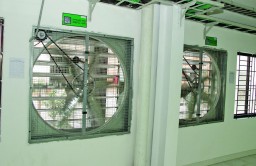

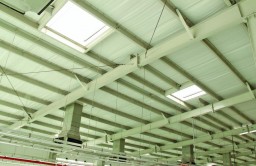
The facility also boasts of CFCfree refrigerants for chillers and cooling system. Its state-ofthe-art CO2 monitoring system, which checks the level of carbon dioxide in the occupied areas, provide prompt feedback to the fans to regulate fresh air flow as and when CO2 level goes up. PFL has also installed a specialized metering device for keeping a constant check on the carbon dioxide levels. This evaporative (desert) cooling system maintains the room temperature at 5°C lower than the temperature outside on an average hot and dry day. At the same time, the power usage of these units are around 50% of the conventional ones. The evaporating cooling system is an extension of direct cooling mechanism which not only cools the working area but also blows the air with a force so as to restrict entry of dust particles or flies in the hall even when the doors and windows are open. The forced air leaves the room with high velocity and considerable draft through the openings preventing entry of any foreign materials. This system also enables the company to maintain the carbon dioxide levels on the shop floor. “990 PPM (parts per million) is the maximum permissible limit according to LEED parameters to maintain proper air quality, while ours is around 518,” underlines Hoque. To ensure more energy savings, sewing machines are equipped with servo motors that require 50% less energy than the conventional sewing machines. Moreover, LED tubes of 1000 lux are provided on each working table which spreads the light in the hall and isles up to 200 lumens, which is in conformity to the compliance standards. Another 30% energy saving is realized by the use of 44 signature series prismatic dome skylights, installed for ambient lighting during the day. It also has a 65 KW capacity solar power plant (one of the largest solar energy plant in Bangladesh), capable of producing at least 110 MW per hour energy to meet at least 13% of the unit’s total power requirement.

PEOPLE at the Centre…
“Despite the stress on environmental issues, people still remain the core of all our initiatives,” mentions Hoque, emphasizing that all the efforts are essentially aimed at ensuring the well-being of the workers and employees, the main drivers of PFL, according to him. Workers’ safety being the prime concern at Plummy Fashions, unlike conventional multi-storeyed building, PFL has been designed with two storeys only with five exits at each floor to guarantee a safe and complete evacuation in an emergency situation. PFL also has a dedicated firefighting unit to face any eventuality in case of a fire breakout in addition to which regular firefighting trainings are also conducted to bring about awareness on the issue. It also has a 6-bed mini hospital with two full-time doctors and nurses to take care of medical needs of the workers besides introducing the novel concept of lifestyle centre (almost a zero carbon emission building designed under USGBC rules), which houses a day care centre for children, a large dining hall, spacious prayer hall, a world class training centre with multimedia facilities and a subsidized canteen, apart from many others, to bring about a positive change in the lives of the workers.